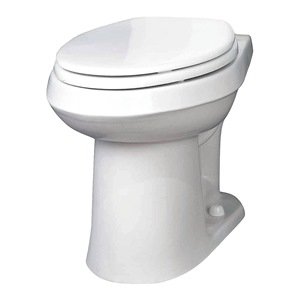
What is the purpose of isolating a tank from the toilet?
Hygienic insulation kits provide a solution for sweat toilet cisterns, which occur in areas with high heat and humidity in the summer months. Sweating toilets can cause significant damage to a house, including the structure, causing water damage and allowing the formation of mold and deteriorate materials, including floor joists and drywall.
KOHLER K-4325-L-0 Kingston(TM) Wall-Mounted 1.6 or 1.28 GPF Flushometer Valve Toilet Bowl with Top Inlet and Bedpan Lugs, Without Seat, White White
The sweat tank of the toilet
A toilet tank usually contains cold water, which is in the tank until the handle of the toilet is pressed, the opening of the valve in the bottom of the toilet and letting the water out of the tank and into the tank. container. Then the waste is thrown down the drain. When the weather heats up and the humidity level rises, hot and humid air condenses when the toilet tank comes into contact. The condensation on the outside of the tank, or the drops of sweat, accumulate until they run out on the sides of the tank and fall on the floor below.
Water damage
A toilet tank will sweat a certain amount of water during a day, depending on the humidity levels inside the bathroom. As water drips on the bathroom floor, water collects or pools around the base of the toilet. This water can damage and discolor the finish of the bathroom floor. Water can also seep into the subfloor where it will damage the floor joists, cause mold growth and ruin the roof and lights below.
Isolation
Toilet tank isolation kits maintain a sweat toilet, providing a layer of insulation between the water in the tank and the walls of the tank. Trim the insulation pieces to fit along the different sides of the inside of the tank. The insulation keeps the walls of the tank from becoming so cold since the insulation keeps the cold water cooling down the walls of the tank. Adhesive that comes with the insulation kit keeps the insulation pieces from coming loose.
other changes
There are other solutions to a toilet tank sweating. You can place a cover on the outside of the toilet, which will help keep water running on the sides of the tank. The operation of a dehumidifier in the house will dry in the air, which will keep the condensation from accumulating in the toilet tank. An anti-sweat valve will introduce hot water into the water supply in the toilet. While the addition of an excess of hot water in the tank or container of a toilet will result in the formation of odorless cracks, an anti-odor valve will introduce enough so that the tank will not be cold enough that condensation will form. Some antisudor valves allow the user to adjust the amount of hot water in the tank or even shut off the hot water supply outside in cold weather.
Thursday, January 24, 2019
Danze DC013230BC Orrington Elongated Toilet Bowl with Soft Close Seat, Biscuit (Bowl Only)
Can a toilet tank be occupied by a water supply by gravity?
One of the ways in which water is supplied through pipes for drinking, cooking and cleaning is through a system of gravity, which is an ancient system that has been in use since humanity began to take advantage of water. One of the many accessories that a gravity water supply can be connected to a toilet, which can use water by gravity to fill the toilet tank.
Danze DC013230BC Orrington Elongated Toilet Bowl with Soft Close Seat, Biscuit (Bowl Only)
Water supplies by gravity
gravity water systems, as the name implies, use the force of gravity to maintain water pressure along a pipe network instead of a pressurized water system that uses a pump or other hydraulic means to maintain the Water moving through the pipe network. Gravity water supply maintains a water reservoir stored higher than the pipe network to maintain this pressure. An example of this type of systems are the visible water towers on top of residential buildings and other structures.
Hygienic operation
Toilets pulled into the water from the pipe network through a plumbing fixture is called a toilet tank fill valve. A mobile float connected to the filling valve rises and falls on top of the water in the measuring tank that is filled. When the water reaches the proper level in the reservoir, the float signals the filling valve to shut off the water supply. After the tank is emptied, the float sinks again, indicating the fill valve to open and refill the tank.
Tap water for the toilet
Gravity water supply pipes connect to the bathroom by running through any floors or intermediate walls. If feeding through a wall, notches are cut into the wall studs so that the pipes sit inside the wall space, and drywall can be placed on top of the wall studs uniformly. In some countries, water pipes to the toilet bowl run along the outside of the walls.
Connecting the Gravity supply pipe
Crown the end of the water supply line by gravity with a water supply valve, which will allow you to cut the water supply for the bathroom without having to interrupt the water supply for the rest of the house. Wrap the inlet on the bottom of the toilet fill valve with plumber's tape, and do the same with the outlet of the water supply valve. Connect a flexible tube between the two by screwing the couplings into the inlet and the thread outlet.
One of the ways in which water is supplied through pipes for drinking, cooking and cleaning is through a system of gravity, which is an ancient system that has been in use since humanity began to take advantage of water. One of the many accessories that a gravity water supply can be connected to a toilet, which can use water by gravity to fill the toilet tank.
Danze DC013230BC Orrington Elongated Toilet Bowl with Soft Close Seat, Biscuit (Bowl Only)
Water supplies by gravity
gravity water systems, as the name implies, use the force of gravity to maintain water pressure along a pipe network instead of a pressurized water system that uses a pump or other hydraulic means to maintain the Water moving through the pipe network. Gravity water supply maintains a water reservoir stored higher than the pipe network to maintain this pressure. An example of this type of systems are the visible water towers on top of residential buildings and other structures.
Hygienic operation
Toilets pulled into the water from the pipe network through a plumbing fixture is called a toilet tank fill valve. A mobile float connected to the filling valve rises and falls on top of the water in the measuring tank that is filled. When the water reaches the proper level in the reservoir, the float signals the filling valve to shut off the water supply. After the tank is emptied, the float sinks again, indicating the fill valve to open and refill the tank.
Tap water for the toilet
Gravity water supply pipes connect to the bathroom by running through any floors or intermediate walls. If feeding through a wall, notches are cut into the wall studs so that the pipes sit inside the wall space, and drywall can be placed on top of the wall studs uniformly. In some countries, water pipes to the toilet bowl run along the outside of the walls.
Connecting the Gravity supply pipe
Crown the end of the water supply line by gravity with a water supply valve, which will allow you to cut the water supply for the bathroom without having to interrupt the water supply for the rest of the house. Wrap the inlet on the bottom of the toilet fill valve with plumber's tape, and do the same with the outlet of the water supply valve. Connect a flexible tube between the two by screwing the couplings into the inlet and the thread outlet.
KOHLER K-4309-96 Cimarron Comfort Height Elongated Toilet Bowl with Class Five Flushing Technology, Biscuit
The addition of water to the back of a toilet tank
The back of a toilet consists of a tank that contains the water that is used when flushing the toilet. The water drains from the tank to the bowl when the chain is pulled, pushing the water from the bowl and the contents down the drain. If the water level of the tank is too low or if you need more water to add pressure to push down contents of the cup that are not easily flushing, you can add water to yourself. This is not a permanent solution for a toilet that eliminates incorrectly or is always running.
KOHLER K-4309-96 Cimarron Comfort Height Elongated Toilet Bowl with Class Five Flushing Technology, Biscuit
Instructions
1 Remove the top cover of the toilet tank. Consider the water level in the tank.
2 Pull the chain while looking inside the toilet tank. Write down where the water level stops. Observe the inside wall of the toilet tank for a watermark or a fading line.
3 Locate the water overflow tube in the tank - a small tube on the top of the tank that deflects the water when the level is too high.
4 Slowly pour the water into the toilet tank until it reaches the level of water discoloration or until it is about one inch below the opening of the overflow tube.
5 Rinse the bathroom to clean the toilet bowl and inspect the level of water that rises in the tank. Add more water if necessary.
Tips and warnings
The back of a toilet consists of a tank that contains the water that is used when flushing the toilet. The water drains from the tank to the bowl when the chain is pulled, pushing the water from the bowl and the contents down the drain. If the water level of the tank is too low or if you need more water to add pressure to push down contents of the cup that are not easily flushing, you can add water to yourself. This is not a permanent solution for a toilet that eliminates incorrectly or is always running.
KOHLER K-4309-96 Cimarron Comfort Height Elongated Toilet Bowl with Class Five Flushing Technology, Biscuit
Instructions
1 Remove the top cover of the toilet tank. Consider the water level in the tank.
2 Pull the chain while looking inside the toilet tank. Write down where the water level stops. Observe the inside wall of the toilet tank for a watermark or a fading line.
3 Locate the water overflow tube in the tank - a small tube on the top of the tank that deflects the water when the level is too high.
4 Slowly pour the water into the toilet tank until it reaches the level of water discoloration or until it is about one inch below the opening of the overflow tube.
5 Rinse the bathroom to clean the toilet bowl and inspect the level of water that rises in the tank. Add more water if necessary.
Tips and warnings
- If the water level is consistently low, this may indicate a problem with the toilet itself. If the arm of the float in the tank is not rising or falling, you may need a replacement. If the water runs constantly, it means that the seal flap locking the hole in the bottom of the tank is loose or misaligned. It can also mean that the float arm is perfectly aligned or broken and must be replaced.
- Do not overfill the toilet tank as this could cause overflow.
- Use a plunger to unclog a clogged toilet before using the water tank filling method.
Gerber Plumbing 21-372 Gerber Ultra Flush Watersense Elongated Toilet Bowl Only, White
Toilet tank settings
Although the exterior design of the bathrooms vary, the vast majority of the bathrooms have a fairly basic tank design. When the handle of the toilet is depressed, a chain attached to a ball at the bottom of the toilet tank rises and allows the water inside the tank to enter the toilet bowl. As the water refills the tank, the level is controlled by a float valve, which then converts the water to the specified level. The vast majority of tank problems can be traced back to one or more of these components, and usually the problem can be solved only with a small adjustment.
Gerber Plumbing 21-372 Gerber Ultra Flush Watersense Elongated Toilet Bowl Only, White
Adjustment of the elevator or chain cable
The bathrooms have either a chain or a cable that connects the handle to the rubber ball or the flap located on the bottom of the tank. If the toilet does not discharge or will not completely eliminate, probably the chain has stretched or the cable has to be straightened. The chain length is adjusted by replacing the chain with one of a different length. Change the chain with one that allows approximately 1/2 inch of slack. Unhook each end of the old chain from the rubber or hinge ball and link the handle to remove it, then connect the ends of the new chain to the components. If the toilet has a wire instead of a chain, straighten the wire by bending it.
Handle adjustment
If the handle of the toilet is difficult to push or sticks when depressed, the handle probably needs to be cleaned and adjusted. Note that a nut secures the back of the handle to the inside of the tank. Turn the nut clockwise with a wrench to remove it. Do not turn the nut in the opposite direction, as the threads are reversed. Rub the nut and the back of the handle with a brush soaked in vinegar to remove any build-up of lime. Turn the nut counterclockwise on the back of the handle to tighten the nut on the handle. Tighten the nut only until the nut is tight, or else the handle will be difficult to depress.
Adjusting the water level in the tank
If the toilet runs continuously, it is very likely that the water level inside the tank needs to be lifted. The water level is determined by the rubber ball or float inside the tank called a "float valve." Most ballcocks are suspended inside the tank by means of a metal arm. Bend the arm to lift the float valve. Other float designs have a metal rod attached to the side of the float valve with a clip. Slide the clip up along the length of the bar to adjust the height of the float valve. Finally, some bathrooms have a float valve without a float mounted on the bottom of the tank. Note that a single screw is located on the back of the float valve. This screw adjusts the water level. Turn the screw clockwise, 1/2 turn at a time, with a screwdriver to raise the water level.
Adjustment of the discharge valve ball
The discharge valve is the opening in the bottom of the tank that tank water flows through when the toilet handle is stepped on. Pressing the handle causes a rubber ball on the bottom of the cable or the lifting chain to rise out of the discharge valve and allow water to drain out of the tank. If the tank is run continuously after adjusting the water level, this ball may need to be adjusted, as it is likely not to seal against the discharge valve. Note that the ball is suspended by a metal guide arm on the discharge valve. The guide arm has a single adjustment screw. Loosen the screw with a screwdriver and move the guide arm until the balloon is placed directly on the discharge valve and the bottom of the ball rests inside the opening of the relief valve, then tighten the arm screw guide.
Although the exterior design of the bathrooms vary, the vast majority of the bathrooms have a fairly basic tank design. When the handle of the toilet is depressed, a chain attached to a ball at the bottom of the toilet tank rises and allows the water inside the tank to enter the toilet bowl. As the water refills the tank, the level is controlled by a float valve, which then converts the water to the specified level. The vast majority of tank problems can be traced back to one or more of these components, and usually the problem can be solved only with a small adjustment.
Gerber Plumbing 21-372 Gerber Ultra Flush Watersense Elongated Toilet Bowl Only, White
Adjustment of the elevator or chain cable
The bathrooms have either a chain or a cable that connects the handle to the rubber ball or the flap located on the bottom of the tank. If the toilet does not discharge or will not completely eliminate, probably the chain has stretched or the cable has to be straightened. The chain length is adjusted by replacing the chain with one of a different length. Change the chain with one that allows approximately 1/2 inch of slack. Unhook each end of the old chain from the rubber or hinge ball and link the handle to remove it, then connect the ends of the new chain to the components. If the toilet has a wire instead of a chain, straighten the wire by bending it.
Handle adjustment
If the handle of the toilet is difficult to push or sticks when depressed, the handle probably needs to be cleaned and adjusted. Note that a nut secures the back of the handle to the inside of the tank. Turn the nut clockwise with a wrench to remove it. Do not turn the nut in the opposite direction, as the threads are reversed. Rub the nut and the back of the handle with a brush soaked in vinegar to remove any build-up of lime. Turn the nut counterclockwise on the back of the handle to tighten the nut on the handle. Tighten the nut only until the nut is tight, or else the handle will be difficult to depress.
Adjusting the water level in the tank
If the toilet runs continuously, it is very likely that the water level inside the tank needs to be lifted. The water level is determined by the rubber ball or float inside the tank called a "float valve." Most ballcocks are suspended inside the tank by means of a metal arm. Bend the arm to lift the float valve. Other float designs have a metal rod attached to the side of the float valve with a clip. Slide the clip up along the length of the bar to adjust the height of the float valve. Finally, some bathrooms have a float valve without a float mounted on the bottom of the tank. Note that a single screw is located on the back of the float valve. This screw adjusts the water level. Turn the screw clockwise, 1/2 turn at a time, with a screwdriver to raise the water level.
Adjustment of the discharge valve ball
The discharge valve is the opening in the bottom of the tank that tank water flows through when the toilet handle is stepped on. Pressing the handle causes a rubber ball on the bottom of the cable or the lifting chain to rise out of the discharge valve and allow water to drain out of the tank. If the tank is run continuously after adjusting the water level, this ball may need to be adjusted, as it is likely not to seal against the discharge valve. Note that the ball is suspended by a metal guide arm on the discharge valve. The guide arm has a single adjustment screw. Loosen the screw with a screwdriver and move the guide arm until the balloon is placed directly on the discharge valve and the bottom of the ball rests inside the opening of the relief valve, then tighten the arm screw guide.
American Standard 3189.016.020 Colony FitRight Elongated Toilet Bowl, White (Bowl Only)
My toilet tank will not fill with water
If you find that the toilet tank will not fill with water, the problem could involve the water supply for the toilet or the toilet fill valve. Your city or municipality can supply water to your home. Water pipe breaks or other problems in your area could cause an interruption in your service. The fill valve in the tank is connected to your home's water supply and the toilet is filled, as needed. If the water is working in the rest of the house, a defective filling valve could be stopping the toilet tank from filling up with water.
American Standard 3189.016.020 Colony FitRight Elongated Toilet Bowl, White (Bowl Only)
Instructions
1 Check the water supply for the other accessories, such as kitchen and bathroom sinks. If these are not working, there is a problem with the main water supply. Call a plumber to help determine where the problem is with your principal.
2 Check that the water supply for the toilet is working. Locate the water supply valve behind the toilet; A hose or pipe connects the valve to the toilet cistern. Open the tap at the end of the valve until the end by turning it to the left.
3 Turn the water supply for hygienic control all the way to the right to cut the water for the bath. Remove the toilet lid. Download the bathroom. After unloading, continue to hold the lever until all the water in the toilet is gone. Use a towel to wipe off any excess water.
4 Place another towel on the floor under the tank. Unscrew the coupling that connects the hose or pipe to the tank, using the tongs. Remove the plastic retaining nut located above the coupling of the hose or pipe. Remove the toilet fill valve from the tank.
5 Insert a new fill valve into the tank. Make sure the gasket is level with the bottom of the tank. Hold this in place with one hand, or have an assistant to hold it for you.
6 Tighten the plastic retaining nut on the bottom of the new filling valve. Fix it in place with the pliers.
7 Wrap the threads of the new fill valve with plumber's tape. The excess is removed. Reconnect the water supply line or the hose coupling to the wrapped wires. Tighten the connection with the pliers.
8 Turn on the water supply knob by turning it counterclockwise. Watch as the tank fills up and check for leaks. Tighten any couplings with pliers as necessary. Pull the chain and make sure everything is working correctly. Put the cover again.
Tips and warnings
If you find that the toilet tank will not fill with water, the problem could involve the water supply for the toilet or the toilet fill valve. Your city or municipality can supply water to your home. Water pipe breaks or other problems in your area could cause an interruption in your service. The fill valve in the tank is connected to your home's water supply and the toilet is filled, as needed. If the water is working in the rest of the house, a defective filling valve could be stopping the toilet tank from filling up with water.
American Standard 3189.016.020 Colony FitRight Elongated Toilet Bowl, White (Bowl Only)
Instructions
1 Check the water supply for the other accessories, such as kitchen and bathroom sinks. If these are not working, there is a problem with the main water supply. Call a plumber to help determine where the problem is with your principal.
2 Check that the water supply for the toilet is working. Locate the water supply valve behind the toilet; A hose or pipe connects the valve to the toilet cistern. Open the tap at the end of the valve until the end by turning it to the left.
3 Turn the water supply for hygienic control all the way to the right to cut the water for the bath. Remove the toilet lid. Download the bathroom. After unloading, continue to hold the lever until all the water in the toilet is gone. Use a towel to wipe off any excess water.
4 Place another towel on the floor under the tank. Unscrew the coupling that connects the hose or pipe to the tank, using the tongs. Remove the plastic retaining nut located above the coupling of the hose or pipe. Remove the toilet fill valve from the tank.
5 Insert a new fill valve into the tank. Make sure the gasket is level with the bottom of the tank. Hold this in place with one hand, or have an assistant to hold it for you.
6 Tighten the plastic retaining nut on the bottom of the new filling valve. Fix it in place with the pliers.
7 Wrap the threads of the new fill valve with plumber's tape. The excess is removed. Reconnect the water supply line or the hose coupling to the wrapped wires. Tighten the connection with the pliers.
8 Turn on the water supply knob by turning it counterclockwise. Watch as the tank fills up and check for leaks. Tighten any couplings with pliers as necessary. Pull the chain and make sure everything is working correctly. Put the cover again.
Tips and warnings
- Do not try to repair a broken fill valve. Many old filling valves do not incorporate anti-siphon technology and trying to repair one of these could violate local building and plumbing standards.
SANIFLO SANIACCESS 3 UPFLUSH MACERATOR PUMP + ELONGATED TOILET KIT, WHITE FINISH
My toilet tank has a sound that escapes
If a leakage noise comes from inside the toilet cistern, the most likely cause is a worn fin. When the handle is activated, the fin is raised, which covers a hole in the bottom of the tank, and allows the water to flow out of the tank and into the container. When the handle is released, the hinge covers the hole and allows the tank to be refilled. If the trap is used, the water will seep into the container and make a noise leak.
SANIFLO SANIACCESS 3 UPFLUSH MACERATOR PUMP + ELONGATED TOILET KIT, WHITE FINISH
Instructions
1 Locate the shut-off valve below the toilet tank and turn it all the way to the right to shut off the water supply to the tank. Remove the lid of the tank to gain access to the interior of the tank.
2 Pull the chain to remove water from the tank. Because the water supply is off, the tank does not fill.
3 Pull the stirrup fin. The fin is attached to the support by means of two plastic pins. Do not pull the pins too far apart or break the bracket.
4 Remove the chain from the top of the trap. The chain can be attached to the hinge with a clip. Alternatively, the end of the chain can slide into a slot in the trap. It is possible to extract the chain by hand or with a pair of pliers.
5 Place the new flap on the end of the chain in the same way as the previous one is attached.
6 Slide the new fin into the pins of the bracket.
7 Open the water supply and let the tank fill with water. Pull the chain two or three times to test the new fin. Replace the tank lid.
If a leakage noise comes from inside the toilet cistern, the most likely cause is a worn fin. When the handle is activated, the fin is raised, which covers a hole in the bottom of the tank, and allows the water to flow out of the tank and into the container. When the handle is released, the hinge covers the hole and allows the tank to be refilled. If the trap is used, the water will seep into the container and make a noise leak.
SANIFLO SANIACCESS 3 UPFLUSH MACERATOR PUMP + ELONGATED TOILET KIT, WHITE FINISH
Instructions
1 Locate the shut-off valve below the toilet tank and turn it all the way to the right to shut off the water supply to the tank. Remove the lid of the tank to gain access to the interior of the tank.
2 Pull the chain to remove water from the tank. Because the water supply is off, the tank does not fill.
3 Pull the stirrup fin. The fin is attached to the support by means of two plastic pins. Do not pull the pins too far apart or break the bracket.
4 Remove the chain from the top of the trap. The chain can be attached to the hinge with a clip. Alternatively, the end of the chain can slide into a slot in the trap. It is possible to extract the chain by hand or with a pair of pliers.
5 Place the new flap on the end of the chain in the same way as the previous one is attached.
6 Slide the new fin into the pins of the bracket.
7 Open the water supply and let the tank fill with water. Pull the chain two or three times to test the new fin. Replace the tank lid.
Gerber Plumbing VP-21-528 Gerber Viper Watersense High-Efficiency Elongated Siphon Jet Toilet Bowl, Ada-Compliant, 1.6 Gpf/1.28 Gpf, White - 2463449
The tiny bubbles in my toilet tank
The sound of small bubbles inside the toilet tank gets quickly annoying, and you can often hear it even with the lid on the tank. The bubbles are the result of a malfunction of the filling valve, which has the duty to allow the water in the tank after each discharge. The repair usually involves the replacement of a gasket of the filling valve or replacement of the filling valve itself.
Gerber Plumbing VP-21-528 Gerber Viper Watersense High-Efficiency Elongated Siphon Jet Toilet Bowl, Ada-Compliant, 1.6 Gpf/1.28 Gpf, White - 2463449
Locating the filling valve
Remove the lid of the toilet tank and look down on the tank, and you will find the fill valve on the left side. Below the tank, the feed line is connected to the bottom of the fill valve, partially protruding through the bottom of the tank. This is where the water moves up from the supply tube and enters the tank. Locate the shut-off valve on the opposite end of the tank supply line, either on the wall or bathroom floor. This valve controls the pressure of the water that enters the tank and also allows it to close completely out of the water that goes to the tank.
Testing the problem
With the tank lid turned off, you can lower the water pressure and see if this prevents the bubbles in the tank. Slightly turn the shut-off valve to the right to decrease the pressure. Sometimes this stops the bubbles, especially if the bubbles are entering the tank from a point around the base of the filling valve. If this does not prevent the bubbles, press down on the rubber gasket inside the tank and determine if the bubbles stop. Sometimes, the fin may not sit properly and allow some water to escape to the bottom of the vessel. This can possibly cause the bubbles, but it is not the most likely cause. Checking anyway allows you to conclusively discard it out.
Repair of the filling valve
If the fill valve is a float valve assembly, pull up slightly on the long arm of the float valve, raising the ball float at the end of the boom. This can temporarily stop the bubbles, although you may have to take additional measures. Turn the stopcock completely to the right, pull the chain and absorb all the water from the leftover tank with a bath towel. Disconnect the supply line from the bottom of the fill valve, lift the tank fill valve and replace the rubber washer on the bottom of the fill valve between the valve and the hole in the tank. Install the fill valve in its place, reconnect the water line, turn the stopcock to the left and see if a new washing machine prevents bubbles.
Replacing the filling valve
If you are replacing the washer in the base of the fill valve, do not remove tiny bubbles, replace the fill valve with a new one. Follow the same procedure as you would to replace only the washing machine, only this time install a new valve. If your toilet currently has a float valve assembly, consider installing a newer-style float-cup filling valve, which allows for fewer problems, especially with no float ball or arm to treat. The only tool that should be necessary for replacing the washer or the fill valve is an adjustable wrench to loosen and tighten the nut that connects the supply line to the bottom of the fill valve.
The sound of small bubbles inside the toilet tank gets quickly annoying, and you can often hear it even with the lid on the tank. The bubbles are the result of a malfunction of the filling valve, which has the duty to allow the water in the tank after each discharge. The repair usually involves the replacement of a gasket of the filling valve or replacement of the filling valve itself.
Gerber Plumbing VP-21-528 Gerber Viper Watersense High-Efficiency Elongated Siphon Jet Toilet Bowl, Ada-Compliant, 1.6 Gpf/1.28 Gpf, White - 2463449
Locating the filling valve
Remove the lid of the toilet tank and look down on the tank, and you will find the fill valve on the left side. Below the tank, the feed line is connected to the bottom of the fill valve, partially protruding through the bottom of the tank. This is where the water moves up from the supply tube and enters the tank. Locate the shut-off valve on the opposite end of the tank supply line, either on the wall or bathroom floor. This valve controls the pressure of the water that enters the tank and also allows it to close completely out of the water that goes to the tank.
Testing the problem
With the tank lid turned off, you can lower the water pressure and see if this prevents the bubbles in the tank. Slightly turn the shut-off valve to the right to decrease the pressure. Sometimes this stops the bubbles, especially if the bubbles are entering the tank from a point around the base of the filling valve. If this does not prevent the bubbles, press down on the rubber gasket inside the tank and determine if the bubbles stop. Sometimes, the fin may not sit properly and allow some water to escape to the bottom of the vessel. This can possibly cause the bubbles, but it is not the most likely cause. Checking anyway allows you to conclusively discard it out.
Repair of the filling valve
If the fill valve is a float valve assembly, pull up slightly on the long arm of the float valve, raising the ball float at the end of the boom. This can temporarily stop the bubbles, although you may have to take additional measures. Turn the stopcock completely to the right, pull the chain and absorb all the water from the leftover tank with a bath towel. Disconnect the supply line from the bottom of the fill valve, lift the tank fill valve and replace the rubber washer on the bottom of the fill valve between the valve and the hole in the tank. Install the fill valve in its place, reconnect the water line, turn the stopcock to the left and see if a new washing machine prevents bubbles.
Replacing the filling valve
If you are replacing the washer in the base of the fill valve, do not remove tiny bubbles, replace the fill valve with a new one. Follow the same procedure as you would to replace only the washing machine, only this time install a new valve. If your toilet currently has a float valve assembly, consider installing a newer-style float-cup filling valve, which allows for fewer problems, especially with no float ball or arm to treat. The only tool that should be necessary for replacing the washer or the fill valve is an adjustable wrench to loosen and tighten the nut that connects the supply line to the bottom of the fill valve.
American Standard 3517.B101.020 Toilet Bowl, White
Why is my toilet tank empty?
Toilet cisterns are normally empty for a short period of time between flushes, filling up within a few minutes in preparation for the next discharge. Problems with certain parts of your toilet and out of it can lead to an empty tank, making it impossible to pull the chain at all.
American Standard 3517.B101.020 Toilet Bowl, White
Closed valve
The water valve that comes out of the wall behind the toilet controls the water flowing in the toilet tank. First check whether the valve is closed or not. If the valve is closed, and you pull the chain, the tank is emptied and does not refill. Twist the valve handle to the left as far as you can, opening the valve to the end, and wait for the tank to fill.
Water obstruction-Line
The flexible water line running from the water valve to the bottom of the toilet tank can become clogged. If you suspect that the water level may be faulty, turn off the water in the valve before removing the water line, both from the toilet and the water valve. Keep an opening in the hose below the sink spout and turn on the water. If the water flows through the hose, then it is not the source of the problem. If the line is the problem, replace it with a new one.
Filling valve capped
The filling valve is the large cylinder inside the toilet tank. The flexible water line that connects to the bottom of the tank supplies water to the valve fill assembly. If you have hard water, the fill valve can become clogged with hard water deposits. You must close the water for the bath, remove the lid from the top of the fill valve, open the water again and clean the fill valve for a few seconds before turning off the water again to replace the stopper.
Flap valve of evil
Hinge valves will last only for a certain amount of time before rubber deteriorates and the fin valve no longer seals the leak in the tank. By dropping a few drops of dark food coloring into the water in your toilet tank, when the water is still, you will be able to observe if the water is seeping beyond the fin. If the tank is empty, fill a bucket and pour in before attempting this test. If colored water seeps into the toilet bowl, replace the fin valve.
Toilet cisterns are normally empty for a short period of time between flushes, filling up within a few minutes in preparation for the next discharge. Problems with certain parts of your toilet and out of it can lead to an empty tank, making it impossible to pull the chain at all.
American Standard 3517.B101.020 Toilet Bowl, White
Closed valve
The water valve that comes out of the wall behind the toilet controls the water flowing in the toilet tank. First check whether the valve is closed or not. If the valve is closed, and you pull the chain, the tank is emptied and does not refill. Twist the valve handle to the left as far as you can, opening the valve to the end, and wait for the tank to fill.
Water obstruction-Line
The flexible water line running from the water valve to the bottom of the toilet tank can become clogged. If you suspect that the water level may be faulty, turn off the water in the valve before removing the water line, both from the toilet and the water valve. Keep an opening in the hose below the sink spout and turn on the water. If the water flows through the hose, then it is not the source of the problem. If the line is the problem, replace it with a new one.
Filling valve capped
The filling valve is the large cylinder inside the toilet tank. The flexible water line that connects to the bottom of the tank supplies water to the valve fill assembly. If you have hard water, the fill valve can become clogged with hard water deposits. You must close the water for the bath, remove the lid from the top of the fill valve, open the water again and clean the fill valve for a few seconds before turning off the water again to replace the stopper.
Flap valve of evil
Hinge valves will last only for a certain amount of time before rubber deteriorates and the fin valve no longer seals the leak in the tank. By dropping a few drops of dark food coloring into the water in your toilet tank, when the water is still, you will be able to observe if the water is seeping beyond the fin. If the tank is empty, fill a bucket and pour in before attempting this test. If colored water seeps into the toilet bowl, replace the fin valve.
American Standard 3195A101.020 Champion PRO Right Height Elongated Toilet Bowl, White
How to measure a toilet tank
The container behind your toilet is called the toilet tank. This tank fills with water that will enter your bathroom during a flush. Toilet cisterns vary in size. You will have to measure a tank when you are determining if it can fit into a space or when you are trying to replace it.
American Standard 3195A101.020 Champion PRO Right Height Elongated Toilet Bowl, White
Instructions
1 Measure the locations of the three holes in the bottom of the tank, referring to the other. These are important measures because they will help determine if a new tank will fit in the toilet if you are replacing the old tank.
2 Measure the length, width and depth of the toilet tank with your measuring tape.
3 Measure the distance from the hole in the handle to the nearest edge of the toilet. If you are going to replace the tank, but have a handle that you want to use, you want to make sure it fits and looks appropriate. Some handles are larger than others and it will be too long for the new toilet. Although a handle can work mechanically in the new toilet, it may seem strange because of its length in relation to the size of the toilet bowl.
The container behind your toilet is called the toilet tank. This tank fills with water that will enter your bathroom during a flush. Toilet cisterns vary in size. You will have to measure a tank when you are determining if it can fit into a space or when you are trying to replace it.
American Standard 3195A101.020 Champion PRO Right Height Elongated Toilet Bowl, White
Instructions
1 Measure the locations of the three holes in the bottom of the tank, referring to the other. These are important measures because they will help determine if a new tank will fit in the toilet if you are replacing the old tank.
2 Measure the length, width and depth of the toilet tank with your measuring tape.
3 Measure the distance from the hole in the handle to the nearest edge of the toilet. If you are going to replace the tank, but have a handle that you want to use, you want to make sure it fits and looks appropriate. Some handles are larger than others and it will be too long for the new toilet. Although a handle can work mechanically in the new toilet, it may seem strange because of its length in relation to the size of the toilet bowl.
American Standard 3195A101.020 Champion PRO Right Height Elongated Toilet Bowl, White
The toilet tank is too slow
A slow filled toilet creates a real discomfort, especially in situations where the toilet is used frequently in a short period of time. Instead of waiting long periods of time for the water inside the toilet tank to fill completely, solve the problem by addressing the common causes of a slow-fill toilet. If your toilet still needs a lot of time to fill, or if there is a problem with other parts of your home's plumbing, call a qualified plumber for help.
American Standard 3195A101.020 Champion PRO Right Height Elongated Toilet Bowl, White
Instructions
1 Turn the handle of the water valve on the toilet bowl counterclockwise until it stops, opening the valve to the end. Pull the chain again to see if the shut-off valve closes too much and was the cause of the slow filling.
2 Turn the water valve lever to the right of the toilet as far as possible to close the flow of water from the toilet. Pull the chain once, then use a sponge several times to absorb the remaining water and squeeze it out into a nearby bucket to empty the toilet.
3 Use a wrench to disconnect the water supply line from the toilet water valve and the toilet tank. Remove the tank lid and set it aside where it will not fall and break.
4 Use a pair of extension tongs to undo the anchor nut for the toilet tank fill valve, which is located on the water supply line connected to the tank. Hold the fill valve with the other hand to prevent it from moving as you undo the anchor nut, then pull the old fill valve from the tank once you have completely loosened the anchor nut.
5 Fit a new toilet tank fill valve and tighten the anchor nut using the blocked channels. Place the new water supply line to the fill valve on the bottom of the tank and the water valve, using a wrench to tighten the connections all the way. Turn the water valve handle counterclockwise to open the valve and refill the toilet tank.
A slow filled toilet creates a real discomfort, especially in situations where the toilet is used frequently in a short period of time. Instead of waiting long periods of time for the water inside the toilet tank to fill completely, solve the problem by addressing the common causes of a slow-fill toilet. If your toilet still needs a lot of time to fill, or if there is a problem with other parts of your home's plumbing, call a qualified plumber for help.
American Standard 3195A101.020 Champion PRO Right Height Elongated Toilet Bowl, White
Instructions
1 Turn the handle of the water valve on the toilet bowl counterclockwise until it stops, opening the valve to the end. Pull the chain again to see if the shut-off valve closes too much and was the cause of the slow filling.
2 Turn the water valve lever to the right of the toilet as far as possible to close the flow of water from the toilet. Pull the chain once, then use a sponge several times to absorb the remaining water and squeeze it out into a nearby bucket to empty the toilet.
3 Use a wrench to disconnect the water supply line from the toilet water valve and the toilet tank. Remove the tank lid and set it aside where it will not fall and break.
4 Use a pair of extension tongs to undo the anchor nut for the toilet tank fill valve, which is located on the water supply line connected to the tank. Hold the fill valve with the other hand to prevent it from moving as you undo the anchor nut, then pull the old fill valve from the tank once you have completely loosened the anchor nut.
5 Fit a new toilet tank fill valve and tighten the anchor nut using the blocked channels. Place the new water supply line to the fill valve on the bottom of the tank and the water valve, using a wrench to tighten the connections all the way. Turn the water valve handle counterclockwise to open the valve and refill the toilet tank.
American Standard 3251D101.021 Toilet Bowl, Standard Height, Bone
What causes the toilet tank to sweat?
One of the many odd, and potentially annoying, phenomena that occur in a home is the "perspiration" WC: the accumulation of water on the exterior walls of the toilet cistern and seat, even when there is no leakage. The solution is a scientific phenomenon called condensation.
American Standard 3251D101.021 Toilet Bowl, Standard Height, Bone
Condensation
The condensation occurs no heating time, the humid air comes in contact with a cold and dry surface. The humid air contains molecules of evaporated water. As this moist air touches a cooler surface, the cold surface causes the air to lower the temperature. Some of the water molecules in the air fall back into the temperature sufficiently back to their liquid state, and they do so under the surface of the toilet tank. Cold water enters the bathroom of underground pipes, cooling the surface of the toilet bowl, which cools the air around it and causes condensation.
Other examples of condensation
Some other examples of condensation are more familiar. Water with ice in a glass, set on a table on a hot or humid day, will gradually accumulate in a puddle of water at its base and exterior surface. The ice and cold water in the glass make the glass itself cold. The surface of the glass cools that the air around it, and part of the moisture returns to its liquid state.
solution Principle
Now that the problem is known, you can solve it. All solutions to the problem try to cope with one of the three factors that contribute to the sweating WC: Cold surface, moist air, and hot air.
Solution 1: Anti-sweat valve
The first, and most dramatic, is to have an anti-sweat valve installed. This simple device is added to the plumbing line for the toilet and leaves just enough hot water in the toilet tank to raise the temperature of the bath surface and prevent condensation.
Solution 2: Dehumidifier
The dehumidifier removes most of the moisture from the air in your bathroom. By removing moisture from the air before it can condense on the surface of the toilet cistern, condensation is prevented. In practice, the dehumidifier works by causing condensation to occur inside the dehumidifier instead.
Solution 3: Low Thermostat
Finally, the thermostat can be lowered. Lowering the thermostat reduces the temperature difference between the toilet surface and the surrounding air. Since condensation depends on hot air touching a cold surface, cooling the air will reduce the amount of condensation.
One of the many odd, and potentially annoying, phenomena that occur in a home is the "perspiration" WC: the accumulation of water on the exterior walls of the toilet cistern and seat, even when there is no leakage. The solution is a scientific phenomenon called condensation.
American Standard 3251D101.021 Toilet Bowl, Standard Height, Bone
Condensation
The condensation occurs no heating time, the humid air comes in contact with a cold and dry surface. The humid air contains molecules of evaporated water. As this moist air touches a cooler surface, the cold surface causes the air to lower the temperature. Some of the water molecules in the air fall back into the temperature sufficiently back to their liquid state, and they do so under the surface of the toilet tank. Cold water enters the bathroom of underground pipes, cooling the surface of the toilet bowl, which cools the air around it and causes condensation.
Other examples of condensation
Some other examples of condensation are more familiar. Water with ice in a glass, set on a table on a hot or humid day, will gradually accumulate in a puddle of water at its base and exterior surface. The ice and cold water in the glass make the glass itself cold. The surface of the glass cools that the air around it, and part of the moisture returns to its liquid state.
solution Principle
Now that the problem is known, you can solve it. All solutions to the problem try to cope with one of the three factors that contribute to the sweating WC: Cold surface, moist air, and hot air.
Solution 1: Anti-sweat valve
The first, and most dramatic, is to have an anti-sweat valve installed. This simple device is added to the plumbing line for the toilet and leaves just enough hot water in the toilet tank to raise the temperature of the bath surface and prevent condensation.
Solution 2: Dehumidifier
The dehumidifier removes most of the moisture from the air in your bathroom. By removing moisture from the air before it can condense on the surface of the toilet cistern, condensation is prevented. In practice, the dehumidifier works by causing condensation to occur inside the dehumidifier instead.
Solution 3: Low Thermostat
Finally, the thermostat can be lowered. Lowering the thermostat reduces the temperature difference between the toilet surface and the surrounding air. Since condensation depends on hot air touching a cold surface, cooling the air will reduce the amount of condensation.
Subscribe to:
Comments (Atom)